The Canadian passport office has recently sparked fierce debate after reportedly refusing to allow “Israel” as a birthplace on certain passports, sparking controversy and debate within the Canadian-Israeli community.
(JNS)
French authorities arrested on Friday four suspects connected to the coercive disruption to a concert performed by the Israeli Philharmonic Orchestra in Paris the previous day.
Three women and a man were detained on charges of violence, destruction and organizing an unauthorized protest, Reuters cited the Paris Prosecutor’s Office as stating.
Activists were seen on videos posted on social media throwing flares and chanting pro-Palestinian slogans at the Philharmonie de Paris complex in the city’s northeastern 19th arrondissement, as audience members and security personnel tried to remove them.
VIDEO:
![]()
Protesters disrupt Israeli orchestra’s performance in Paris
Footage captured by a spectator at the Philharmonie de Paris shows a protester holding a flare, disrupting a performance by Israel’s national orchestra. The orchestra’s visit to the French capital had drawn… pic.twitter.com/oUDYP4NlqC
— AFP News Agency (@AFP) November 7, 2025
At least one hooligan could be seen dodging individuals who tried to stop him or her. The incident apparently lasted a few minutes.
The concert went ahead despite three interruptions, the venue said.
“I strongly condemn the actions committed last night during a concert at the Philharmonie de Paris. Nothing can justify them,” French Interior Minister Laurent Nuñez said on X.
“I thank the personnel from the Paris police who enabled the rapid arrest of several perpetrators of serious disturbances inside the venue and contained the demonstrators outside. Four people have been placed in custody,” he added.
According to Le Monde, the disruptions began at around 8:40 p.m., when the Israeli orchestra, conducted by Lahav Shani, performed Ludwig van Beethoven’s Piano Concerto No. 5, also known as the “Emperor Concerto” in English-speaking countries.
A woman stood up, shouted, “Israel murders,” and hurled yellow leaflets into the crowd, which read, “Israel, you play the symphony of your genocidal army,” Le Monde reported.
The concert resumed after the woman was removed.
Standing ovation for the Israeli Philharmonic after their performance in France
The applause came after Hatikvah, the Israeli anthem.
Free Palestine tried to discriminate against these brave, talented musicians.
Our songs will never be drowned out by their hate
pic.twitter.com/2qFOk5ERxd
— Hen Mazzig (@HenMazzig) November 7, 2025
Another woman who attended the concert with her son told the newspaper that “five, maybe 10 minutes later, the orchestra stopped playing again. I saw a young man brandish a flare on the balcony. There were flames, it was striking. It could have been very dangerous. There were screams, an usher was in tears. I was really frightened.”
The Philharmonie de Paris said it had filed a police complaint, adding that it “deplores and strongly condemns the serious incidents that occurred,” France 24 reported.
The French branch of the Boycott, Divestment and Sanctions (BDS) movement, together with other anti-Israel organizations, had called on the hosting venue to cancel the concert.
The disruption joined a wave of anti-Israel actions throughout Europe over the past few months, pushing for a cultural boycott of the Jewish state.
In September, organizers of a classical music festival in Belgium canceled a concert by the Munich Philharmonic that was to be conducted by Shani, 36, the music director of Israel’s national orchestra.
In a statement announcing the concert cancellation, organizers said that the positions of Shani, the Munich Philharmonic’s Israeli conductor, “vis-à-vis the genocidal regime in Tel Aviv are unclear.”
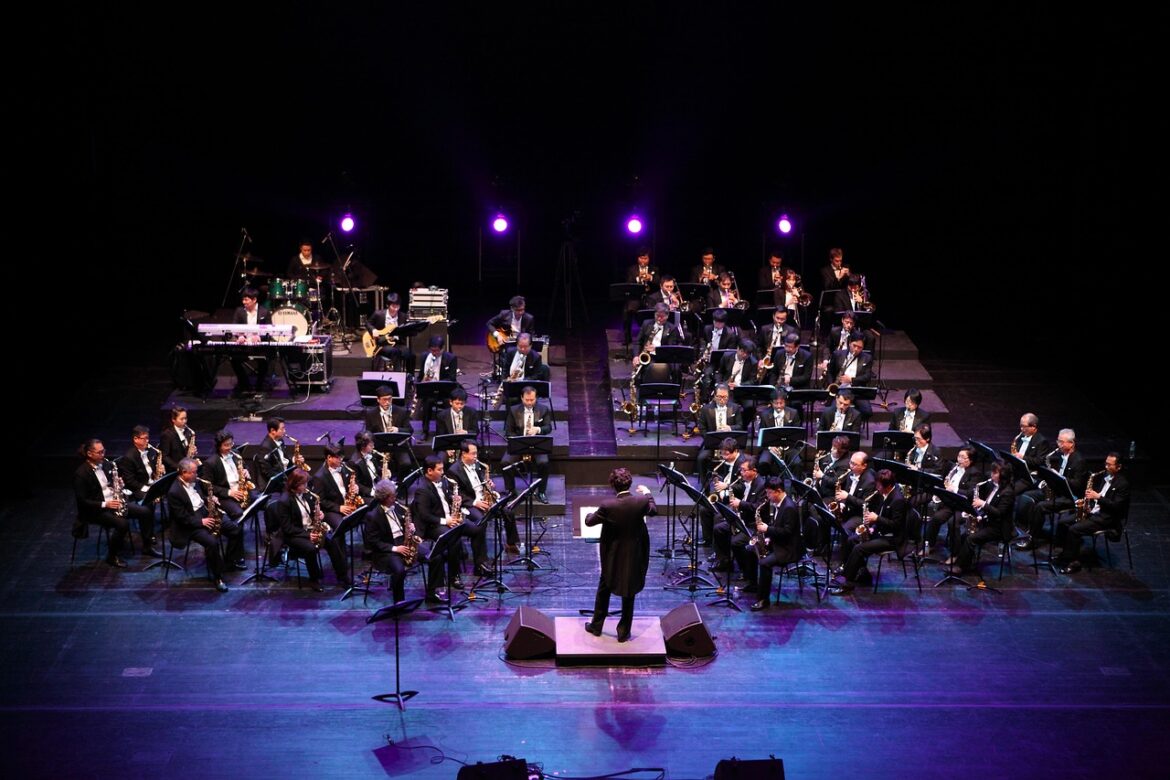
Image: The Israel Philharmonic Orchestra with conductor Lahav Shani. Source: IPO/YouTube.
(JNS)
A new joint command center established by the United States military’s Central Command (CENTCOM) in the Israeli city of Kiryat Gat in recent days to help manage the future of the Gaza Strip is described by former Israeli military officers as an “unprecedented” development in external involvement in the affairs of the Strip.
The Civil-Military Coordination Center (CMCC) houses hundreds of personnel. The three-story structure includes a first floor designated as for Israeli security personnel only (a secure area for officials from the IDF, Foreign Ministry, Mossad and Shin Bet).
While the third floor is for U.S. personnel only, the second floor is a joint working hub where Israelis, Americans and representatives from other partner nations work side-by-side. The partners include Germany, Spain, Denmark, Britain, Canada, Italy and France, alongside international bodies such as the United Nations and various humanitarian aid organizations.
The goal of the CMCC is to provide solutions to rebuilding Gaza and ensuring its demilitarization, including that Hamas is disarmed. The Israeli section’s purpose is to ensure that Israeli military and diplomatic interests are factored into the considerations.
Israel reserves its right to take action to neutralize threats without any prior consultation, as it did on Saturday in an airstrike that eliminated a Palestinian Islamic Jihad terror operative in central Gaza who the IDF said was planning to conduct an attack.
The center’s work is divided into six main groups: humanitarian aid, security for forces operating in Gaza, physical infrastructure, including sewage systems, civil infrastructure, such as new health and education systems, joint intelligence, and the formation of an International Stabilization Force (ISF) intended to enter Gaza.
CENTCOM referred JNS to an Oct. 21 statement, which declared the formal opening of the center on Oct. 17, describing the headquarters as supporting “stabilization efforts,” while clarifying that American forces will not deploy to Gaza.
The statement described the CMCC as the “main coordination hub for Gaza assistance,” housing approximately 200 U.S. service members under Lt. Gen. Patrick Frank, commander of the U.S. Army in Central Command (U.S. Army Central).
The CMCC will “monitor implementation of the ceasefire agreement,” said CENTCOM. Its commander, Adm. Brad Cooper, stated that “bringing together stakeholders who share the goal of successful stabilization in Gaza is essential for a peaceful transition.”
Col. (res.) Moshe Elad, one of the founders of security coordination between the IDF and the P.A. and a former Israeli military governor in Jenin, Bethlehem and Tyre in Lebanon, described the center, formed in the context of Trump’s 20-point plan, as a “step of a unique and complex nature, strategically and operationally.”
Elad noted that the center does offer advantages to Israel. “Israel receives ‘part of the work’—implementation of a sequence of aid, infrastructure, international supervision—which reduces parts of the day-to-day management and infrastructure [demands] from it in the possible transformation of Gaza,” he stated.
Elad added that the center serves as a bridge to the international community and helps transition from active war to stabilization.
“This is an unusual step in that the center was established within Israel,” he said. “U.S.-Israel cooperation is usually within the framework of military coalitions, intelligence exchanges, training, assistance—but here we are talking about a regional monitoring and rehabilitation body located in Israel.”
However, Elad also highlighted risks, stating that such a center, which houses American and international teams in Israel and focuses operational-logistical decisions in relation to Gaza, may be perceived by the Israeli public as a certain waiver by Israel of its independence of action.
“There is a risk that the public or some of the parties in Israel will see it as an entry of an external factor into the decision-making process,” he cautioned.
If the center or the truce agreement do not lead to substantial results, like the release of all deceased captives, or a stable Gazan government, it will face substantial criticism in Israel, said Elad.”
Israel must ensure that during the time that the CMCC is active, it will not erode Israel’s own ability to act independently or to resume the combat if necessary,” he added. Doing so is critical for ensuring that the region does not come to view Israel as “less a strategic partner and more a player entering a maneuver coordinated with the U.S. this could harm the possibility of regional strengthening [of Israel’s status] or future normalization agreements.”
Col. (res.) Michael Milshtein, head of the Palestinian Studies Forum at the Moshe Dayan Center for Middle Eastern and African Studies at Tel Aviv University and a former head of the Department for Palestinian Affairs in IDF Military Intelligence, characterized the center as a watershed moment.
“The CMCC venture is an unprecedented event in the history of the conflict and one of the most dramatic expressions of the American administration’s involvement in the Israeli-Palestinian conflict. Nothing like this has ever happened,” Milshtein told JNS.
“Strategically, and here one must be honest, there is a pushing aside of Israel and a certain limitation of its room for action. The Americans are moving forward and serving as the strategic designers of the day after in Gaza, while controlling all military and civilian operations,” he said.
Milshtein assessed that the meaning for Israel is a “need for approval for every military move, which of course limits freedom of action,” noting that the U.S. has welcomed Qatari and Turkish influence, while deciding to continue transferring aid despite truce violations by Hamas.
Milstein argued that this trend, possibly in the near future, could lead to “some compromise regarding disarmament, even if it does not meet Israel’s criteria.”
He added that there are growing numbers of reports that the U.S. is also moving to take over the civilian aspects of Gaza management.
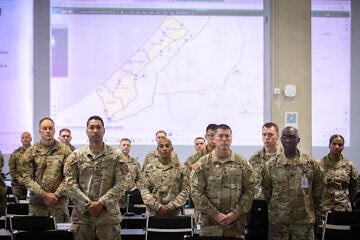
Image: US troops at the Civil-Military Coordination Center in Kiryat Gat during Secretary of State Marco Rubio’s visit on Oct. 24, 2025. Photo by Olivier Fitoussi/POOL.
(Israel Hayom via JNS)
Troops from Azerbaijan and Indonesia are expected to form the core of the International Stabilization Force (ISF) to be deployed in Gaza.
This has emerged from recent discussions between U.S. Vice President JD Vance, Israeli Prime Minister Benjamin Netanyahu and their respective teams. The force is anticipated to consist of tens of thousands of soldiers.
Indonesia has a long history of contributing troops to international policing missions under the United Nations, including to the United Nations Interim Force in Lebanon (UNIFIL). Israel has maintained close and longstanding relations with Azerbaijan across various fields, including security cooperation.
The move to deploy troops from these two Muslim-majority countries comes after Israel blocked Turkey’s participation in the Gaza force. Israel Hayom has learned that the US accepted Israel’s position, and Turkish forces will not take part in military operations in Gaza.
Saudi Arabia and the United Arab Emirates declined to participate in the mission. Additionally, President Donald Trump has made clear that U.S. troops will not enter Gaza. The idea of deploying Qatari soldiers to demilitarize Gaza was never considered, leaving Azerbaijan and Indonesia as the only viable options.
The process of coordinating the deployment of troops from Indonesia and Azerbaijan is underway but still in its early stages. One obstacle is Indonesia’s insistence that any international force must be authorized by a U.N. Security Council resolution.
Talks toward securing such a resolution have begun. However, Israel remains wary of Security Council resolutions, citing bitter experience and the inability to enforce decisions.
At the same time, France is pushing to include the establishment of a Palestinian state in the proposed resolution, a step to which Israel is firmly opposed. Intense negotiations are ongoing among the involved parties in an effort to reach a mutually acceptable formulation.
There is skepticism in Israel about whether such a resolution could pass, and whether an international force—if formed—would be capable of carrying out its mandate. For now, the political directive to the defense establishment is to give the U.S.-backed plan a chance. However, many believe that at some stage, Israeli military action will be necessary to achieve these goals.
Another unresolved issue under discussion is whether the IDF would retain operational freedom to act against Hamas threats in Gaza, similar to how it currently operates against Hezbollah in Southern Lebanon.
Originally published by Israel Hayom.
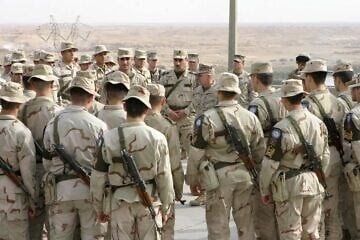
Image: Azerbaijani soldiers circle around U.S. Maj. Gen. Richard A. Huck, the commander of the 2nd Marine Division, during his visit to Camp Hadithah Dam, Al Anbar, Iraq, Jan. 2, 2006. Photo by Cpl. Adam C. Schnell/U.S. Marine Corps via Wikimedia Commons.
(JNS)
The Eurovision Song Contest board recently postponed an emergency vote on whether to ban Israel from next year’s competition in Vienna.
“The board agreed to place the issue on the agenda of its ordinary Winter General Assembly in December,” instead of the extraordinary online meeting originally scheduled for November, Reuters reported Monday, citing a statement from the European Broadcasting Union (EBU).
Austria, which will host the May 2026 event, had urged countries not to boycott the contest over Israel’s participation amid the Gaza conflict.
The Austrian national broadcaster ORF told Reuters that it welcomed the EBU’s decision.
Several countries have pledged to withdraw from the event if Israel takes part, including the Netherlands and Ireland. Germany has said it would pull out of the contest if Israel is excluded.
Israel and Hamas reached a ceasefire on Friday, ending a two-year conflict that began on Oct. 7, 2023, when thousands of Hamas-led terrorists invaded Israel, killing approximately 1,200 people and abducting around 251.
Image: St. Jakobshalle, the arena hosting the 2025 Eurovision Song Contest in Basel, Switzerland, May 2025. Photo by Nathan Stolero.
(JNS)
Israel and the Central Asian country of Tajikistan have signed their first bilateral agreement in the field of tourism, during a landmark visit by an Israeli minister to the Muslim nation.
The milestone in the relations between the countries, which established ties on March 26, 1992, after the fall of the Soviet Union, highlights the potential for cooperation between the Jewish state and Muslim former Soviet republics in the wake of the 2020 Abraham Accords.
Israeli Tourism Minister Haim Katz and Jumakhonzoda Jamshed Jurakhon, chairman of the Committee for Tourism Development of the Republic of Tajikistan, inked the memorandum of understanding on Thursday at the UN Tourism Investment Forum in Dushanbe, in the first official visit by an Israeli minister to the country.
“Tourism is a bridge between peoples, bringing unique opportunities for international cooperation,” Katz said in a statement. “Even during this challenging time, I met representatives of countries with which we have no official relations and was received with friendship.”
The agreement aims to expand cooperation in tourism, complementing existing collaborations in agriculture and rural development.
The landlocked developing Central Asian country of some 11 million people, which is more than 90% mountainous, borders Afghanistan, Uzbekistan, Kyrgyzstan and China.
Israel is represented in Tajikistan by its non-resident ambassador based in neighboring Uzbekistan.
During his visit, the Katz also met with Montenegro’s Tourism Minister Simonida Kordić, who is also chairman of the U.N. World Tourism Organization’s Commission for Europe, and Uzbekistan’s Minister of Tourism and Cultural Heritage Aziz Abdukhakimov, as well as senior officials from the local tourism industry.
Image: Israeli Tourism Minister Haim Katz (right) and Tajikistani Committee for Tourism Development Chairman Jumakhonzoda Jamshed Jurakhon after signing the accord in Dushanbe, Sept. 18, 2025. Credit: Israeli Ministry of Tourism.
(JNS)
For the first time, Orthodox students outnumber secular students among Israel’s first-grade pupils.
Education Ministry data for the 2025/26 school year lists just over 66,000 pupils entering state-secular schools, compared with roughly 72,000 combined in the state-religious and Haredi streams.
Arab, Bedouin, Druze and Circassian schools together account for about 40,000 first graders, bringing total enrollment to just under 180,000.
Demographer Sergio DellaPergola, professor emeritus and former chairman of the Hebrew University of Jerusalem’s Harman Research Institute of Contemporary Jewry, explained that these statistics are the culmination of a long trend.
“For many years, we have seen the numbers shifting in this direction; the shift has been gradual but stable,” DellaPergola told JNS.
DellaPergola further explained that the driving force behind this shift is fertility: “Clearly, the dominant factor is the birth rate. The birth rate is the main engine of population change in Israel …, the wide differences in the birth rate of different sections of the Israeli population … determine a much faster rate of growth among the religious population and, in particular, the Haredim.”
Two decades ago, about six in 10 Jewish first graders were enrolled in the secular system; today, it is fewer than half.
DellaPergola noted that official forecasts underestimated the scale of the change: “There are more than 40% more children in first grade in the Haredi system than had been expected 10 years ago, whereas changes for the secular and Arab systems are virtually nil.”
He added that while secularization continues to play a demographic role, its effect is limited compared with fertility: “There is a continuous transfer of people from one movement or section of persuasion to another …, a net process of secularization in Israeli society. However, this is very weak compared with the actual numbers of the newborn, which are substantially stronger.”
DellaPergola emphasized that first-grade enrollment is a preview of future society: “First grade is six years after you are born, so the trend anticipates what will happen later.”
Israeli educational performance
While the enrollment figures highlight who is entering Israel’s classrooms, test results indicate what those students are learning once inside. National assessments provide a first look at how different parts of the system are performing against the backdrop of a major demographic shift.
The most recent Meitzav (“School Efficiency and Growth Indicator”) exams, Israeli national standardized tests for students in Hebrew, math, English and science, showed widening gaps between pupils in the center and those in the geographic and socioeconomic periphery.
Average math scores in state-secular schools were roughly 40 points higher than in the Haredi sector, where many schools do not administer the test at all. Arab schools, serving nearly one-fifth of the country’s students, also reported significantly lower averages in core subjects compared with the Jewish state system.
Israel’s standing in international comparisons tells a similar story. In the 2022 OECD PISA exams, Israeli 15-year-olds scored an average of 458 in math, 474 in reading and 465 in science, each slightly below the OECD averages of 472, 476 and 485, respectively.
In math, 63% of Israeli students reached level 2 or higher, compared to 69% across the OECD; in science, 68% achieved this level, versus 76% on average.
At the top end, 6% of Israelis reached levels 5 or 6 in math, while in reading, Israel was closer to the OECD norm.
The results also highlighted wide internal gaps: high-achieving pupils in Tel Aviv and Jerusalem performed on par with peers in Europe and East Asia, while students from peripheral towns and low socioeconomic communities scored far lower.
Yitzhak Klein, former head of the Department of Policy Research at the Kohelet Policy Forum, told JNS, “The Israeli public education system really doesn’t work. It’s comparable to dysfunctional systems in big American cities like Chicago or New York, structures weighed down by interests that have little to do with children’s needs.”
Source of the problem
Some critics point to the organization of the school system as a central issue.
State-secular, state-religious, Haredi and Arab schools operate under separate curricula and oversight. The critics argue that the structure allows families to choose an education aligned with their community, but also produces uneven resources and outcomes.
However, Klein dismissed these concerns, saying “the division into multiple school systems doesn’t drive polarization so much as reflect it. The schools mirror Israel’s cultural divisions rather than create them.”
The highly centralized Ministry of Education continues to face pressure to give schools greater autonomy.
Advocates argue that more local control would allow principals and teachers to adapt to their students’ needs, while critics caution that it could deepen inequalities between the different streams.
Staffing is also often cited as one of the system’s weak points. Israel employs about 200,000 teachers, yet statistics from the Education Ministry show gaps persist in math, English and science, particularly in schools outside major cities.
Education Ministry data further shows that more than a third of teachers leave the profession within their first five years, and average salaries remain below the OECD mean despite recent agreements to raise wages.
Some observers argue that these shortages and retention problems are a major reason for weaker student outcomes. Others contend that performance is less a question of numbers than of policy, pointing to overcentralization, bureaucracy and limited school autonomy.
Avrum Tomer, a researcher of education policy at the Kohelet Policy Forum and head of the parents organization HaDor HaBa—Parents for Choice in Education, rejected the shortage narrative in his interview with JNS.
“According to all available data, there is no shortage of teachers. On the contrary, in recent decades the number of teachers in the system has grown rapidly relative to the number of students,” he said.
“On the ground, then, there is a shortage, but it stems from centralization and the lack of flexibility that a freer, more responsive labor market could provide to meet the varying needs in each place,” Tomer said.
For those skeptical that teacher shortages are the main reason for weak outcomes, attention often turns to the unions. The Israel Teachers’ Union and the Secondary School Teachers’ Association (SSTA) are among the most influential labor groups in the country, regularly clashing with the Finance Ministry over salaries, contracts and work rules.
Tomer was blunt: “Teachers’ unions in Israel could, in principle, play a constructive role. Instead, they have become a heavy weight on the system’s neck, consistently blocking essential reforms.”
He added that by prioritizing seniority over excellence, the unions have entrenched mediocrity over merit.
Klein echoed the criticism, linking bureaucracy with organized labor: “Administratively, everyone suffers from the way the system is run. The Ministry of Education retains complete centralized control run by career bureaucrats, political leaders are threatened constantly with strikes, and the unions demand quantity over quality. Together, it’s a recipe that blocks improvement.”
Both Tomer and Klein explained that beyond the issues surrounding union politics and bureaucracy, teacher quality was also a central weakness.
Tomer stressed, “The real challenge is not the number of teachers in the system but their quality. We fail to attract the most capable university graduates into teaching.
Klein voiced similar concerns about standards in teacher training: “People who populate schools of education are not the top college students, but near the bottom. … a system cannot be better than the teachers who populate it, and the teachers in Israel are, as a whole, not good.”
He argued that low salaries prevent talented candidates from entering the classroom: “If you had 3% of the entering class in the Technion engineering schools going into teaching math and physics, you could solve a big part of the problem, but you’re not going to solve it at 9,000 shekels [$2,700] a month.”
Klein summarized the point bluntly, saying, “The qualification needed for being a teacher in Israel is basically having a pulse.”
Both Klein and Tomer emphasized that greater school autonomy is another factor critical for raising standards.
Klein explained that meaningful reform depends on giving principals real authority: “To really improve, schools need autonomy. Principals should be able to hire and fire, and to pay enough to bring talented people into math and science classrooms. Without that flexibility, you can’t attract the people who could raise standards.”
He added that local administration of the education system during the COVID pandemic proves that decentralization can work in practice: “The dirty secret is that local authorities already managed fairly well during Corona without the ministry’s micromanagement.
“What’s needed from the state is not to run schools but to set clear standards of what a student should know by the end of each grade,” Klein said.
Tomer made a similar argument, saying that the state should set measurable goals but avoid interfering in day-to-day management.
Innovation and reform
Despite recurring labor disputes and persistent bureaucratic hurdles, a growing wave of educational reforms has advanced in Israel over the past several years.
One of the most significant is the Shoreshim (“Roots”) program, announced on May 27, 2025, by Education Minister Yoav Kisch. The initiative seeks to reinforce Jewish and Zionist identity by embedding weekly Bible classes in all schools from grades 1 to 12 and integrating a Bible study exam into the national Meitzav assessment.
A new core subject, “Paths of Heritage,” is being introduced for elementary and middle schools by 2026. To support this rollout, more than 1,600 educators have undergone specialized training. The education budget for Jewish identity studies alone has quadrupled, from 1% to 4% of total allocations in just one year.
In parallel, Israel has embraced technological transformation in the classroom, culminating in the declaration of 2025 as the “Year of AI.” As part of this program, the Ministry of Education launched a national effort to train 70,000 teachers in classroom applications of artificial intelligence, supported by 3,000 mentors from more than 400 tech companies, including Google, Microsoft, Apple and Nvidia.
Five core AI tools, ranging from chatbot tutors to Minecraft-based learning environments, are being deployed across grades 4 to 12 to enhance lesson planning, engagement and personalization.
Complementing this initiative is the AI Regulatory Sandbox Pilot, launched in July 2025 with 10 million shekels ($3 million) in funding. The sandbox allows approved ed-tech companies to run live experiments in public schools, testing AI-driven personalized learning solutions under regulatory supervision.
These reforms aim not only to boost academic performance but also to mitigate challenges such as teacher shortages, large class sizes and uneven resource allocation.
Local governments have also experimented with alternative models, building on earlier pilots. Municipalities such as Tel Aviv and Haifa have expanded their “autonomous schools” program, granting principals greater discretion over hiring, budgeting and curriculum design, within national guidelines.
In the Negev and Galilee, charter-style schools continue to pilot STEM-focused curricula supported by philanthropic foundations. Though evaluations show modest improvements in student engagement and achievement, efforts to scale these models nationwide have met logistical and institutional opposition.
Tomer pointed out that political resistance is a persistent barrier.
“Any courageous minister of education who attempts to lead fundamental change will immediately face fierce opposition from all those who benefit from the status quo: teachers’ unions, senior bureaucrats, and at times, local authorities,” he said.
Tomer added that the state of Israel’s education system constitutes a paradox, considering the country’s standing as an international leader in tech innovation.
“Israel’s technological renaissance is being driven by only a relatively small portion of the population. … The excelling minority benefits from stronger educational opportunities, partly because it is less dependent on the state system and receives much enrichment from outside it,” Tomer said.
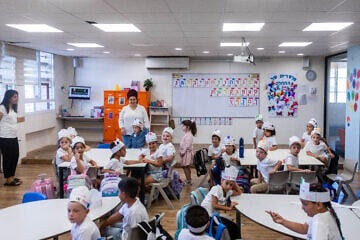
Image: First graders on the first day of school in Jerusalem, Sept. 1, 2025. Photo by Chaim Goldberg/Flash90.
(JNS)
In bars, clubs and college campuses across the world, a hidden threat lingers at the bottom of the glass. Drug-facilitated assaults remain an underreported but persistent danger—and an Israeli startup believes it has found the answer.
WiSP, founded in 2022, has developed a small, reusable device paired with an app that instantly scans drinks for the presence of drugs and alcohol. Its founders call it “cybersecurity for consumption.”

“We test everything after it’s in us. Why not before?” CEO and co-founder Liat Kaplan asked rhetorically in a recent interview with JNS. “WiSP began with drink spiking detection, but our vision is broader. We want to empower people to make safer choices and to take control of their wellness.”
WiSP was launched by Liat Kaplan, chemical analyst Aviv Kaplan and electro-optical specialist Dr. David Avraham.
At its core is Raman spectroscopy, a proven forensic technique that identifies substances by their molecular “fingerprints.”
Unlike single-use strips that are slow and limited, WiSP’s system works in seconds, providing reliable results without altering the drink.
The current prototype is the size of a small console with a handheld wand (2 by 8 by 10 inches). A pocket-sized version—small enough to slip into a handbag or jacket—is already in development. The device connects to the WiSP app, which delivers real-time alerts, safety insights, and educational tools.
Kaplan calls it a platform, not just a product. “Our vision goes beyond drink spiking detection. We want to empower people to make safer choices and take control of their wellness,” he said.
Tested on campus
The urgency behind WiSP’s first use case is obvious. In the United States, drug spiking is a recurring threat in nightlife and college Greek life communities.
During a pilot program at several universities, students welcomed the technology.
“For the last several weeks, we’ve brought our WiSP with us everywhere,” said Elise Purcell, an undergraduate at Washington University in St. Louis. “It became part of our normal night out. Once people noticed it, they wanted to learn more. Everyone felt safer knowing it was there.”
More than 80% of participants said the device improved their sense of safety—proof that WiSP is addressing a very real problem.
WiSP’s founders say drink spiking is only the beginning. The company is already working on add-ons for measuring alcohol and sugar content, and has longer-term plans to detect fentanyl, allergens and bacteria such as E. coli.
“WiSP is a platform for actionable wellness,” Kaplan explained. “It’s not just about avoiding danger; it’s about understanding what you put in your body, tracking trends and reaching personal goals.”
Future features could help users monitor nutrition, manage workout regimens and receive personalized wellness insights.
Market strategy
WiSP’s go-to-market strategy is ambitious: partnerships with fraternities and sororities, collaborations with city governments and integration into public-safety initiatives. Kaplan confirmed that the company is in discussions with U.S. senators and municipal leaders to bring WiSP into broader safety campaigns.
The first international pilot took place in Nottingham, England, where the city incorporated WiSP into its nightlife safety program.
“As a city committed to creating a vibrant and welcoming nightlife, Nottingham is always exploring innovative ways to enhance the experience for everyone,” said Rich Lane, head of Operations and Business Crime. “Partnering with WiSP reflects our commitment to confidence and well-being. By embracing solutions like WiSP, we empower individuals to take control of their safety and reinforce Nottingham’s status as a modern, inclusive city.”
For investors, WiSP represents both a social good and a commercial opportunity.
“Investing in a start-up is always a nuanced process,” said venture capitalist Rich Moran, an early backer. “I have full confidence in WiSP as a force in tech and nightlife safety. Drink spiking is just the beginning. WiSP is poised to become a category leader that empowers individuals and changes how we think about personal safety.”
Commercial release is expected in 2026, with WiSP positioning itself at the intersection of safety, science and lifestyle.
With growing awareness of personal security, particularly among students and young adults, the timing may be ideal.
If successful, WiSP won’t just track our steps or heartbeats. It could mark the start of a new frontier, where technology actively protects us from the hidden dangers in what we consume.
Featured Image: WiSP has developed a small, reusable device paired with an app that instantly scans drinks for drugs and alcohol content. Credit: Courtesy.
(JNS)
Sanaa, Yemen, was the target of major Israeli airstrikes this week—an operation cloaked in secrecy but widely believed to have struck the upper echelons of Iran’s jihadist proxy war machine. On Thursday, an Israeli airstrike reportedly killed the Houthi defense minister, Mohamed al-Atifi, and chief of staff, Muhammad Abd al-Karim al-Ghamari.
The Israeli action came after days of relentless Houthi missile barrages from Yemen—another front in a war Israel never asked for but must now fight, for its survival. On Wednesday, Israelis rushed into bomb shelters—twice in just 10 days—as long-range rockets fired from impoverished, war-torn Yemen rained down in Tehran’s direction.
Seven active fronts now threaten the Jewish state: Gaza, Lebanon, Syria, Yemen, Judea and Samaria, Iran and the global battlefield of antisemitism. Israel must simultaneously rescue hostages, defeat Hamas, protect its civilians and withstand international condemnation.
Israel is attempting what no army has ever done: defeat a genocidal enemy that hides behind civilians, while continuing to deliver humanitarian aid to those same civilians, all under the glare of a hostile international press. More than 20,000 Hamas and allied fighters remain entrenched in tunnels, firing rockets from beneath schools, hospitals, and mosques. The IDF has gone to unprecedented lengths to minimize civilian casualties, but for Hamas, every dead Gazan is a propaganda victory.
Meanwhile, the global jihadist movement is emboldened and flush with cash. Antisemitic demonstrations spread across Europe and America, echoing Hamas’s talking points almost word for word.
In Washington this week, U.S. President Donald Trump met with Ron Dermer, Jared Kushner and Middle East envoy Steve Witkoff to chart Gaza’s postwar future. One certainty emerged: Hamas will play no role in it. The international community must now choose whether to help build something sustainable—or reward terror once again.
On Israel’s northern border, a strike on Syrian forces prevented the destruction of a critical observation post. Talks are even underway with Abu Mohammad al-Julani, leader of the former al-Nusra Front, that could lead to mutual recognition by September.
In Lebanon, the government courageously voted to disarm Hezbollah, though the terror group—acting on Iranian orders—has so far refused. Still, Palestinian factions in Lebanon have already surrendered their arms, showing that pressure can work.
Iran, meanwhile, is cornered. It continues to enrich uranium to 60% in defiance of the IAEA and refuses inspections. Britain, Germany and France are threatening to reimpose “snapback” sanctions. Israel is watching closely, knowing the ayatollahs will exploit every Shi’ite proxy they can find, from the Houthis to Hezbollah, to extend their reach.
But while Israel fights for survival, Europe adds fuel to the fire. France is spearheading a September push at the United Nations to recognize a Palestinian state. Israeli Prime Minister Benjamin Netanyahu rightly accused President Emmanuel Macron of fueling antisemitism in France. Foreign Minister Gideon Sa’ar put it more bluntly: “If a terrorist organization embraces you, you’re in the wrong place.”
Recognition without reform is not statehood; it is a reward for Hamas, and a betrayal of every hostage still in captivity.
Israel is also taking moral leadership where others have failed. This week, Netanyahu formally recognized the Armenian genocide, the Shoah of the Armenian people. For decades, Israel hoped to maintain warm relations with Turkey, once imagined as a bridge between Islam and the West.
But Turkish President Recep Tayyip Erdoğan has chosen instead to style himself an Ottoman sultan, demonizing Jews, calling Netanyahu “Hitler,” and building his influence on antisemitic hatred. His persecution of the Kurds only underscores his brutality.
By recognizing the Armenian genocide—at a moment when Armenia and Azerbaijan have finally made peace under Trump’s mediation—Israel has made peace with historical truth. That is no small achievement.
Israel today is under fire from seven directions. It faces Iran’s nuclear program, Hamas’s tunnels, Hezbollah’s rockets, and Europe’s hypocrisy. But it also demonstrates resilience, clarity and moral leadership. Where others equivocate, Israel names evil for what it is—and acts.
The world should take note. Rewarding terror only guarantees more war. Standing with Israel, by contrast, is the only path to peace.
Image: Israeli Defense Minister Israel Katz and IDF chief Eyal Zamir (R) discuss strikes on Yemen on August 28, 2025.
(JNS)
Scandinavian Airlines (SAS) will resume service to Israel this fall, restarting service from Copenhagen to Tel Aviv for the first time in more than nine years, the national airline of Denmark, Norway and Sweden announced on Thursday.
The move highlights the resurgence of the Israeli aviation sector and the reemergence of Ben-Gurion International Airport as a travel hub at a time when an ever-increasing number of foreign carriers have resumed flights to Israel.
SAS will offer thrice weekly flights to Tel Aviv from the Danish capital starting on Oct. 26.
“This is a bold step and shrewd business decision which proves once more that economic reasoning trumps political reasoning when it comes to the tourism industry,” Mark Feldman, CEO of Jerusalem’s Ziontours, told JNS on Friday. “SAS will find this to be a very profitable route.”
The Scandinavian carrier had stopped flying to Israel in 2016.
Other international carriers planning to resume service to Israel include Delta Air Lines, set to restart flights next month. Air Canada, Italy’s ITA Airways, British Airways and Irish budget carrier Ryanair are scheduled to resume operations in October.
Some 92,000 passengers traveled through Ben-Gurion International Airport on Thursday, the highest single-day figure since the Hamas-led terrorist attacks on southern Israel on Oct. 7, 2023, according to the Israel Airports Authority.
Image: A Scandinavian Airlines Airbus A350 airliner en route to Dulles International Airport near Washington, D.C., on March 1, 2020. Photo by Dylan T/Scandinavian Airlines System via Wikimedia Commons.
Voice of the Jewish Community – JTVC is an online news magazine providing original and exclusive media content focused on strengthening bonds between the Jewish Diaspora and Israel.
We bring the Jewish Diaspora and Israel closer together through showing each in a positive light, while countering the AIM Syndrome. AIM is the unique blend of Antisemitism, Israel phobia, and Miseducation, which together threatens our society like nothing before. We counter AIM with a more powerful and favorable dialogue. JTVC shares original media content, including high calibre interviews and documentaries that focuses on our mission.
No products in the cart.