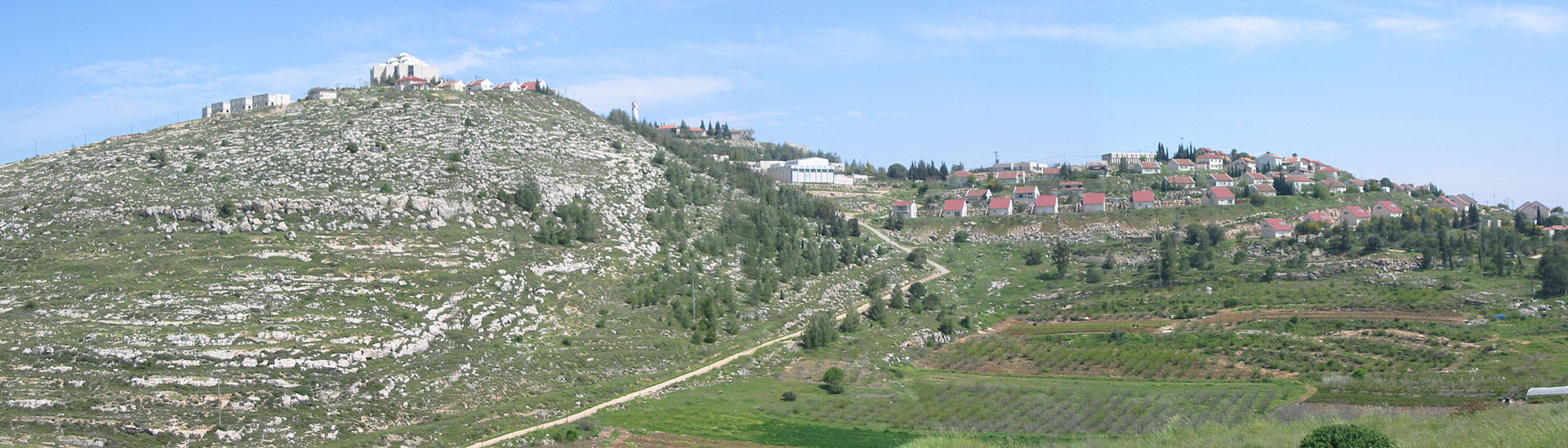
According to a recent report by Israel National News, over a thousand Christian leaders and influencers — from the United States and abroad — are scheduled to arrive at Ancient Shiloh tomorrow (Friday, 5 December 2025) as part of a larger pilgrimage and advocacy tour. The visit is described as “the main event” of a week-long tour that has led participants through other significant Jewish and historic sites in Israel, culminating in what is described as the largest delegation of its kind in Israel’s history to descend on Judea and Samaria. Oganized by Friends of Zion (FOZ) and led by its founder Mike Evans, in cooperation with the Ministry of Foreign Affairs (Israel), the delegation reportedly comprises Christian pastors, influencers, and community leaders — many of whom are presented as representing “tens of millions of Americans.”
Their agenda at Shiloh is planned as a guided tour of the site, learning about its historical and biblical significance, and to participate in “a mass prayer for Israel’s success.” ערוץ 7 Proponents of the visit frame it as a sign that “Judea and Samaria is no longer Israel’s backyard, but … a main destination for leaders from around the world.” ערוץ 7+1
Why Ancient Shiloh Matters — Historical & Religious Context
Ancient Shiloh occupies a unique place in biblical and archaeological history. Long before the renowned Temples in Jerusalem, Shiloh is described in biblical tradition as the location where the Israelites set up their Tabernacle — a tent-sanctuary — and housed the Ark of the Covenant. For roughly 369 years — well before the First Temple era — Shiloh served as a center of worship, pilgrimage, and spiritual life for the ancient Israelites. Chabad
Today, the site is more than a historical memory. Ancient Shiloh operates as an archaeological and heritage site: a visitor center offers guided tours through ruins, explanatory displays, and paths tracing millennia of settlement, religious significance, and historical layers. In recent years, it has attracted not only Israeli visitors but also international pilgrims — especially from Christian communities drawn by the biblical associations. Notably, earlier in 2025, high-level visits to Shiloh underscored this trend: for example, Mike Huckabee, U.S. Ambassador to Israel and a prominent Baptist pastor, visited the site — signaling a new era in evangelical engagement with Shiloh. Jerusalem Post+1
What This Visit Represents — Political, Religious, and Cultural Significance
That a large Christian-leaders delegation is visiting Shiloh — especially in Judea and Samaria (the West Bank) — carries symbolic weight on several levels.
-
Religious solidarity and pilgrimage: For many Christian evangelicals and believers, visiting a site like Shiloh is deeply meaningful — a way to physically connect with biblical history, to show support for Israel, and to express shared heritage rooted in Scripture.
-
International advocacy and diplomacy: The involvement of FOZ and cooperation of Israel’s Ministry of Foreign Affairs indicates that the visit is not just spiritual, but also political: public diplomacy aimed at strengthening international Christian support for Israel, especially in contested areas like Judea and Samaria.
-
Changing perceptions of Judea and Samaria: As noted by local leadership cited in Israel National News — including the head of the regional council — the delegation is framed as proof that these territories are no longer viewed as periphery, but as central parts of Israel’s heritage. ערוץ 7+1
-
Potential for controversy and tension: Given the political sensitivities surrounding Israeli presence and visits in the West Bank, mass Christian pilgrimages may stir reactions among Palestinians, regional actors, or international observers — particularly given the intertwining of faith, heritage, and politics.
What We Know — And What Remains to Be Verified
What we know (based on public reporting):
-
A delegation of over 1,000 Christian leaders and influencers is scheduled to visit Ancient Shiloh on 5 December 2025. ערוץ 7
-
The delegation is organized by FOZ, under the initiative of Mike Evans, with reported cooperation from Israel’s foreign ministry. ערוץ 7+1
-
The planned activities include a tour of the site, historical/religious education, and a collective prayer for Israel. ערוץ 7
-
Past visits to Shiloh by high-profile Christian and Israeli figures (e.g. Mike Huckabee) have already taken place, demonstrating growing interest in the site from faith-based and political leaders. Jerusalem Post+2ערוץ 7+2
What remains uncertain or unconfirmed (from publicly available sources):
-
While “over a thousand” participants are cited, there is no independent verification (e.g., from neutral media outlets outside of religious or pro-Israel press) of the full size, identity, or global representation of the entire delegation.
-
The possible reactions from local Palestinian communities, regional actors, or broader Israeli civil society are not described in the public announcement — thus the broader local reception remains unclear.
-
Long-term implications — whether this visit will set a pattern for frequent mass Christian pilgrimages to Judea and Samaria, or whether this is a one-off — remain to be seen.
Broader Context: Rising Christian-Israeli Engagement
This visit comes amid a noticeable trend: increasing Christian (especially evangelical) engagement with Israeli biblical-heritage sites. According to recent reporting, a “1,000–strong evangelical delegation” arrived in Jerusalem not long ago for what was described as “the largest public diplomacy delegation in history.” JNS.org+1
Advocates argue that such visits strengthen Israel’s international support network — especially among non-Jewish, faith-based communities — and can help shape global perceptions of Israel and its heritage.
At the same time, critics warn of potential politicization of religious pilgrimage, especially when visits are concentrated in contested territories. The intertwining of faith, archaeology, and geopolitics makes sites like Shiloh more than just historical or religious landmarks — they become symbols in a broader narrative about sovereignty, identity, and belonging.
Conclusion — A Moment of Significance, With Many Open Questions
Tomorrow’s planned visit of hundreds of Christian leaders to Ancient Shiloh marks an important moment: one that underscores how biblical-heritage, international faith networks, and modern diplomacy are increasingly overlapping in Israel. For some, the pilgrimage will be a spiritual journey — a tangible link to ancient Israel and biblical history. For others, it is a political statement — a signal that Judea and Samaria are part of Israel’s living heritage, worthy of international recognition and support.